
What is the "torii" in "TORiiGAOKA"?
The Oldest Surviving Stone Torii Gate in Japan
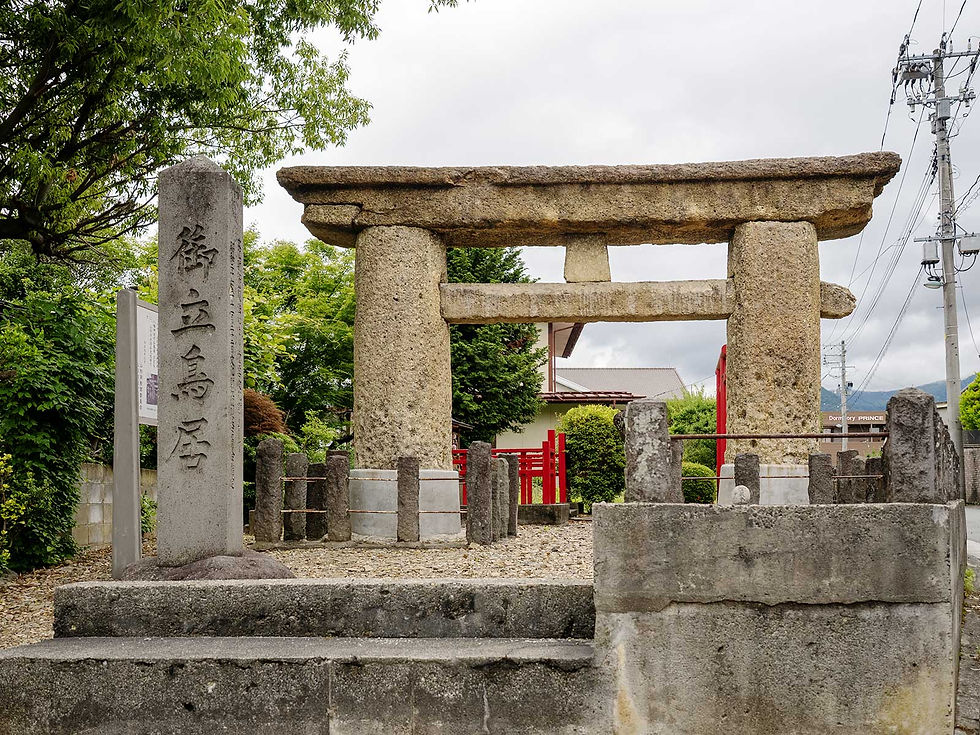
In the residential area of Toriigaoka, Yamagata City, stands a stone *torii* gate that has endured for approximately one thousand years. Known as the "Motoki Stone Torii," this structure is believed to have been erected during the late Heian period and is recognized as one of the oldest surviving stone *torii* gates in Japan.
In the past, a pilgrimage route to Mount Ryuzan—a site that flourished as a sacred center for mountain worship—ran through this area. The Motoki Stone Torii serves as a valuable cultural asset, preserving the history of that faith to the present day.
One of Japan's oldest stone torii gates, boasting a history of approximately 1,000 years.
The Motoki Stone Torii Gate, located in Toriigaoka, Yamagata City, is a nationally designated Important Cultural Property. Believed to date back to the late Heian period, it received this national designation in 1952.
Standing approximately 3.5 meters tall with pillars about 1 meter in diameter, the gate is constructed from shaped tuff. It features thick stone pillars and straight horizontal beams, retaining an archaic, powerful appearance that differs from the torii gates found at modern shrines.
Another stone torii gate from the same era still exists within Yamagata City, in the Zao-Narisawa district. Both are considered among the oldest stone torii gates in Japan and are invaluable for understanding the architectural techniques and religious culture of the transitional period between ancient and medieval times.

The History of Takiyama Worship and Mountain Asceticism
The Motoki Stone Torii Gate, located in Toriigaoka, Yamagata City, is a nationally designated Important Cultural Property. Believed to date back to the late Heian period, it received this national designation in 1952.
Standing approximately 3.5 meters tall with pillars about 1 meter in diameter, the gate is constructed from shaped tuff. It features thick stone pillars and straight horizontal beams, retaining an archaic, powerful appearance that differs from the torii gates found at modern shrines.
Another stone torii gate from the same era still exists within Yamagata City, in the Zao-Narisawa district. Both are considered among the oldest stone torii gates in Japan and are invaluable for understanding the architectural techniques and religious culture of the transitional period between ancient and medieval times.
Scenes of prayer remaining amidst the modern cityscape.
Now, after the passage of some 1,000 years, the Motoki Stone Torii Gate stands quietly in a corner of a peaceful residential neighborhood in southern Yamagata City.
It is not surrounded by the expansive grounds or magnificent shrine buildings typically associated with major shrines. Yet, the sight of a stone structure from the Heian period remaining intact amidst the everyday cityscape offers a unique charm found nowhere else.
Having withstood the elements over the centuries, the stone torii has been carefully preserved and repaired as a cultural asset. Its form—retaining traces of ancient mountain worship—quietly tells the story of the region's history and the prayers of the people.
If you visit Yamagata, why not stop by this site? It offers a chance to touch upon a timeless history—a different kind of experience from the city's more glamorous tourist attractions.